Create a small-area space mobile acquisition task
This article describes the complete workflow for a small-area space mobile acquisition mapping task, including task creation, data preparation, data upload, and mapping process notes, helping users quickly complete mapping requirements for small-area scenes.
Create a small-area mobile acquisition task
Click the
Mobile Acquisition Taskbutton in the upper-right corner.

In the dialog box that appears, enter the task name, select the mapping version and data format (the latest version is recommended), set the acquisition method to
Space Acquisition, and finally click theConfirm Addbutton to finish creating the small-area mobile acquisition task.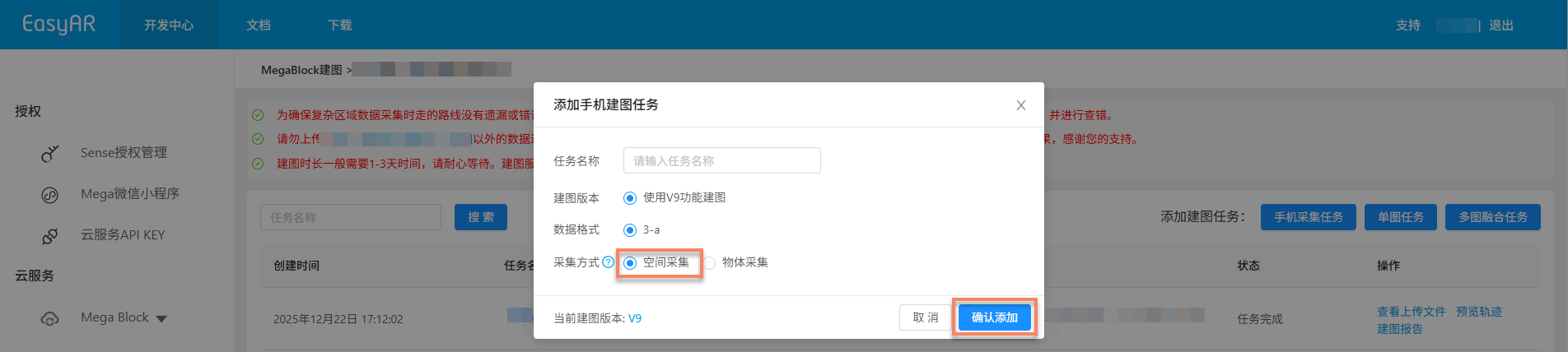
Data acquisition and export
Use a mobile phone to acquire small-area space data. For device configuration and acquisition key points, refer to:
Upload data
Click the
Upload Databutton.

In the upload data window that appears, complete the following configuration:
- Acquisition data: select and upload a file with the
.empsuffix.
- Acquisition data: select and upload a file with the
After completing the settings, click the
Confirm Uploadbutton.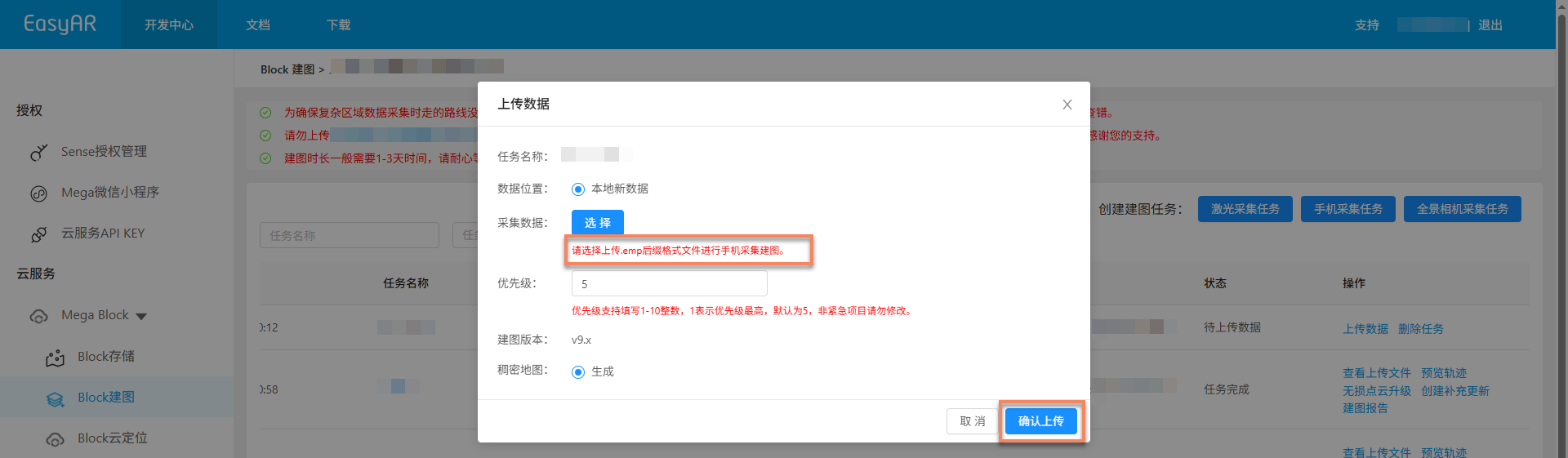
Start mapping
After the data is uploaded, the mapping process starts automatically, and the status is shown as Queued or Generating. The mapping duration varies depending on the data size. Please wait patiently.

Auxiliary functions
The following functions can help you better manage and operate mapping tasks and improve work efficiency:
View uploaded files
Used to check whether the uploaded mapping files are complete and avoid mapping failure caused by missing files.
Click the
View Uploaded Filesbutton, view the list of all uploaded files in the pop-up window, and confirm whether the files have been uploaded completely.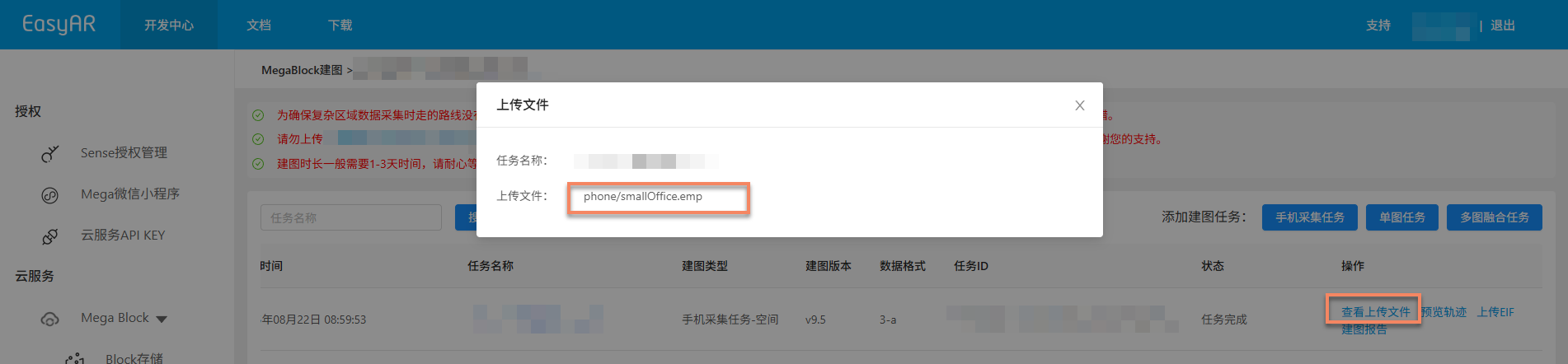
China Region 1: you can click a specific
.emp suffix fileto preview the video content online and ensure that the acquired data quality meets the requirements.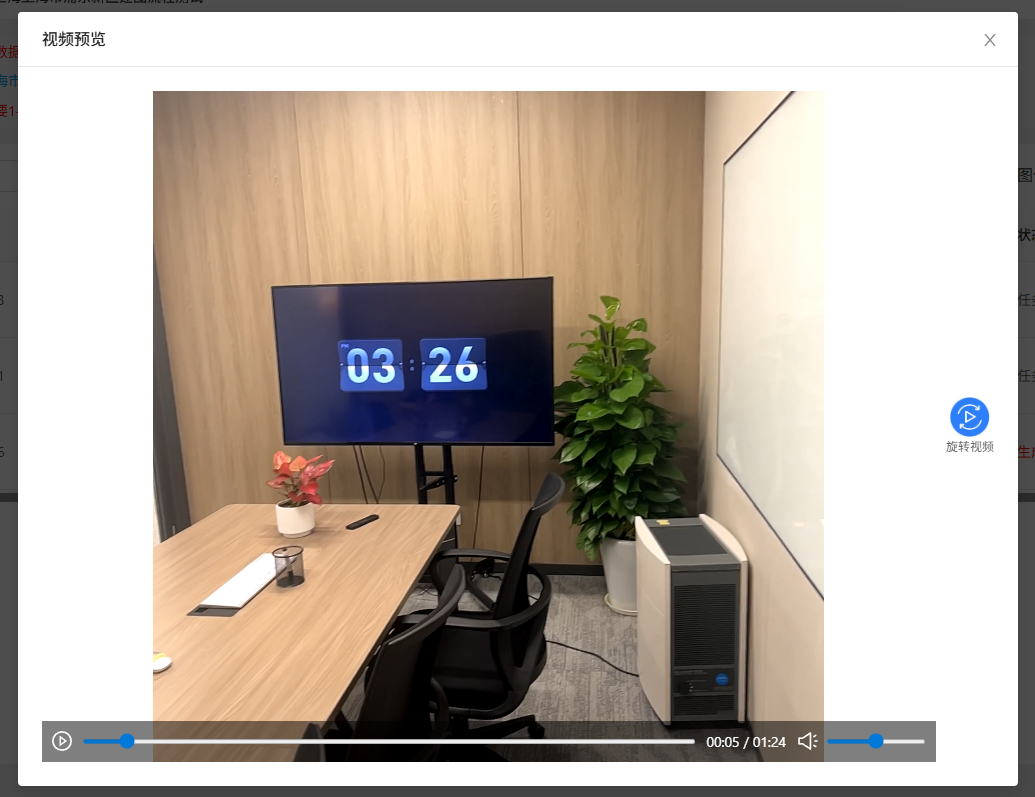
Stop mapping
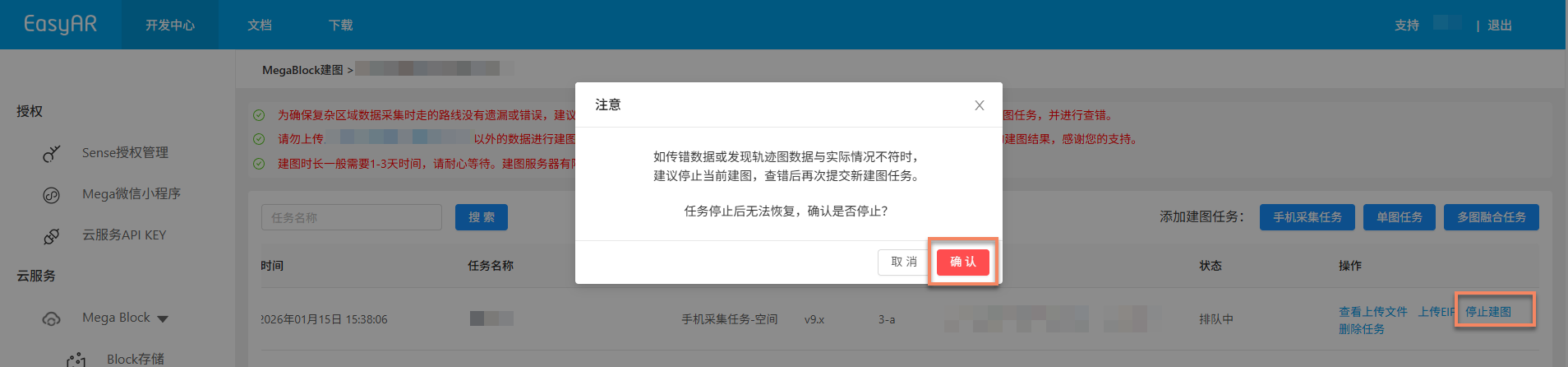
Before the mapping task is completed, if you find that the wrong data was uploaded or the trajectory data does not match the actual situation, you can click the Stop Mapping button and then click Confirm in the secondary confirmation pop-up window to stop mapping.
Delete task
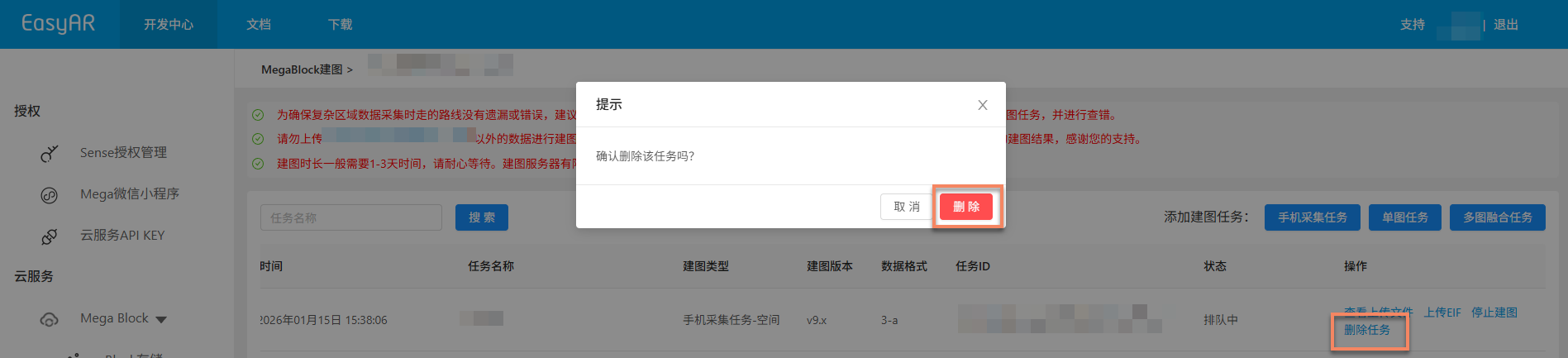
If the current mapping task fails to generate or is no longer needed, you can click the Delete Task button to delete the task. Click Delete in the secondary confirmation pop-up window to complete the deletion.
Confirm mapping result
After the task enters the mapping process, you can use Task Status to determine whether the mapping task is complete. When the status is shown as Task Complete or Generation Failed, the mapping task has ended.

Mapping succeeded
When the task status is shown as Task Complete, mapping succeeded and the mapping result has been generated. You can further view the mapping result and confirm whether it meets the expected requirements.
View the mapping result:
- Review acquisition route (not supported by Mega Go)
- View mapping report
- Preview space model
- View Block information (not supported by Mega Go)
Mapping failed
When the task status is shown as Generation Failed, mapping failed. It is recommended to troubleshoot as follows:
- View mapping report: View mapping report and find a solution based on the report information.
- Refer to troubleshooting: refer to the mapping failure troubleshooting guide for common solutions.
- Contact technical support: if none of the above methods resolve the issue, contact EasyAR staff and provide the
Task IDfor quick issue location.